Autumn jogging

When the weather changes, so should your gear

Délka čtení: 7´ | Author: Eda

Summer is slowly coming to an end. Mornings are getting colder, evenings are shorter, and the weather is no longer as predictable as it was a few weeks ago. Instead of hot asphalt, we are waiting for wet leaves, puddles, mud, and sometimes even rain. For some, it's a signal to slow down and put away your running shoes for a while. For others, on the contrary, one of the best times of the year for running is beginning. Autumn has its own charm. The air is fresher, the temperatures are more pleasant, and nature offers a completely different backdrop than in summer. And if you dress properly and choose the right equipment, you don't have to change your running regimen just because the weather changes. You just need to start thinking a little differently.

What to wear in autumn? How to dress when it's ten degrees in the morning and fifteen in the afternoon? When is a waterproof jacket appropriate, when to reach for a headlamp and why right now might be the perfect time to try gravel running shoes ? In our autumn guide, you'll find practical tips to help you prepare for everything autumn running can bring. Because running doesn't end with the last day of summer. It just starts to get a little more interesting.

Title (22)

The basis of running in every season = the right running shoes

In summer, it's often enough to put on your favorite road shoes and hit the road. Dry asphalt, minimal leaves, and stable conditions allow us to not worry too much about what's happening under our feet. But in the fall, the situation changes quickly. In the morning, the asphalt may be wet with dew, while running you may encounter a layer of fallen leaves, and your favorite path through the park turns into a muddy section after the rain. It is at such moments that, in addition to comfort and cushioning, a sure-footed stance and sufficient grip of the sole become important.

This doesn't mean you have to automatically swap your road shoes for trail shoes when fall arrives. It's more important to think about where you're actually running.


Do you mainly run on asphalt? Road shoes will suffice.

If most of your route is asphalt, cycle paths or paved city roads, there is no reason to put aside your favorite road shoes . It is just worth considering that a wet surface can have significantly less grip than dry asphalt. Therefore, when choosing a new shoe in the fall, pay more attention to the sole. It is not just about how soft the shoe is or how much cushioning it has. Good grip can give you more confidence with every step.

Do you want to try something new this year?

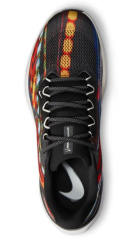
Autumn is the season when gravel running shoes can make a lot of sense. They are not as focused on technical terrain as classic trail models , but at the same time they offer more versatility than purely road shoes . Their advantage will be shown especially on routes where you alternate several different surfaces during one run. Asphalt, park path, gravel, forest path and asphalt again? This is exactly where gravel models excel.

Moreover, you don't have to sacrifice comfort for them, which you will appreciate on longer runs. For autumn 60-90 minute runs, when you don't want to worry about whether the route will take you off the asphalt, they can be a very interesting alternative. Likewise, on days when the asphalt is wet and full of pitfalls such as fallen leaves or smaller branches.

What if it's really wet?

There is no one-size-fits-all answer here either. If you run mostly on the road and occasionally get caught in the rain, you don't necessarily need to look for a shoe with a membrane. However, if you regularly venture out into wet terrain, deal with puddles and don't want your feet to be completely soaked after a few kilometers, a waterproof option may be an interesting choice. Autumn shoes may not necessarily be "better" than summer shoes, they should primarily be better for the conditions in which you will be using them.

And that's the most important question when choosing fall shoes: Where do you most often run when you leave the house?


 

What to wear? Layers are your best friend in fall

While a T-shirt and shorts are often enough in summer, autumn can be a bit unpredictable. One day you go running in a pleasant 15°C, the next day you'll be greeted by a cold morning, wind and rain. And that's why it pays to not rely on one universal piece of clothing in autumn, but rather on proper layering. The foundation should be functional clothing that wicks sweat away from the body. Depending on the current conditions, you can add another layer and, in case of wind or rain, a light running jacket . The advantage is that you can dress according to the specific day and don't have to change your entire wardrobe every time it gets colder.


A typical autumn combination can be surprisingly simple:

functional t-shirt → windbreaker or waterproof jacket + depending on the weather, you can add a long sleeve or light sweatshirt

In lower temperatures , gloves, a headband or a thin hat will also come in handy. These little things can make a big difference during a colder run.

And one practical tip? Don't choose your clothes based on how you feel when you leave the house. You may feel a little cold during the first few minutes of running, but once you warm up, your body temperature will rise quickly. If you wear too much clothing, a pleasant autumn run can quickly turn into an unnecessarily sweaty trip. A simple tip is: dress as if it were about 10 degrees warmer .

Rain is no reason to stay home

Autumn running sometimes means running in the rain. And while light drizzle is usually not a big deal, a lightweight waterproof running jacket is a good choice for longer or more intense rain. It doesn't have to be heavy or bulky. On the contrary, the ideal is one that you hardly notice while running. It will protect you from rain and wind, but at the same time won't unnecessarily hinder your movement.

But just like with shoes, there is a simple rule: there is no one best outfit for every autumn day . You might be dressed differently for a ten-kilometer dry run at 12°C, or differently for an hour-long run in the rain and wind. And it is the ability to adapt your outfit to the current conditions that will allow you to run comfortably practically all season long.

Title (23)

When it gets dark, think about safety

As autumn approaches, daylight hours start to dwindle and running in the dark quickly becomes a regular part of your training. And that's when it pays to think not only about comfort, but also about being visible . A headlamp will illuminate your path and help you spot bumps, roots or puddles, while reflective elements and lights will increase your visibility to drivers, cyclists and other runners.

You don't have to dress head to toe in reflective gear. But running out in the dark in black without a single light or reflective element is not the best way to enjoy a safe workout. In the fall, it simply applies: when you can't see, it's important for others to see you.

Title (24)

Enjoy the diversity of autumn

Fall running doesn't have to mean compromise. It might just mean heading out on a cooler morning instead of a warm summer evening, wearing shoes with more grip, and packing a headlamp. The key is to match your gear to the conditions, not the other way around. With the right shoes, layers, and a little bit of attention to visibility, you can keep running even when the weather starts to change from day to day.

And maybe now is the perfect time to try something new. Take the route you normally run on asphalt, turn onto gravel or a forest path, and see where running can take you.
Because autumn is not the end of the running season. It's just another chapter, so let's enjoy it to the fullest.